Foot pain can significantly affect your quality of life, making even simple activities like walking or standing uncomfortable. One lesser-known but increasingly common cause of chronic foot pain is fat pad atrophy. At Goldberg Podiatry Center, our board-certified podiatrists specialize in diagnosing and treating fat pad atrophy using modern, patient-focused approaches to help restore comfort and mobility.
What Is Fat Pad Atrophy?
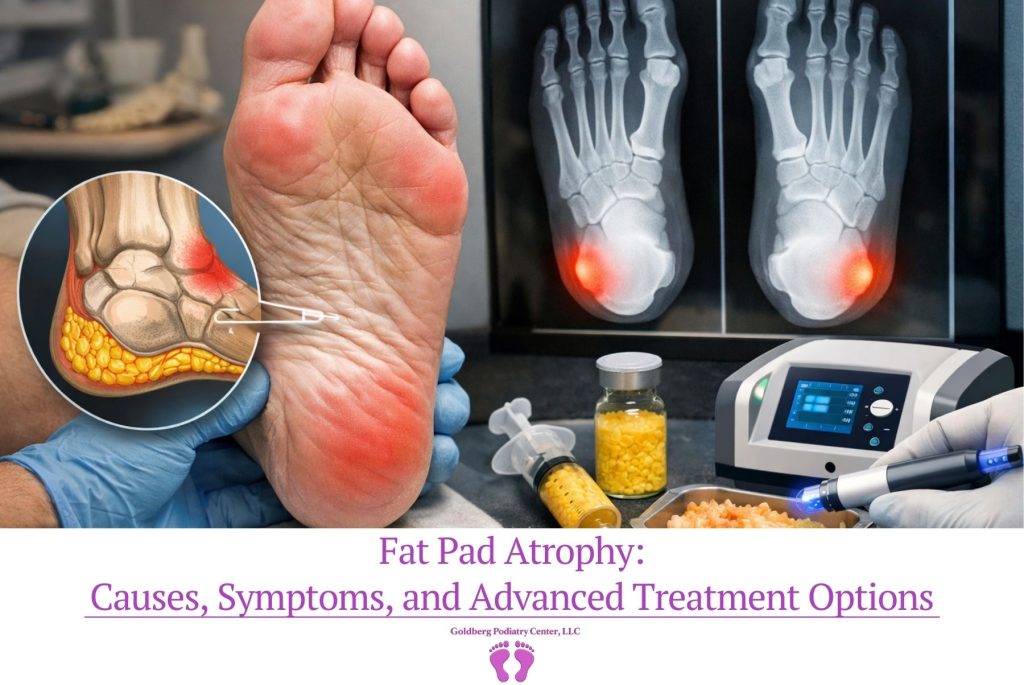
Fat pad atrophy occurs when the natural cushioning on the bottom of the foot thins or deteriorates over time. These fat pads—especially under the heel and the ball of the foot—are essential shock absorbers that protect bones, joints, and soft tissues from pressure during walking and standing.
When this padding breaks down, patients may experience pain, tenderness, and difficulty with daily activities.
Common Causes of Fat Pad Atrophy
Fat pad atrophy can develop for several reasons, including:
- Aging – Natural loss of fat tissue over time
- Repetitive impact – Long periods of standing, walking, or running
- Improper footwear – Thin-soled or unsupportive shoes
- Medical conditions – Rheumatoid arthritis, diabetes, or connective tissue disorders
- Previous steroid injections – Can weaken or thin fat tissue
- Foot structure abnormalities – High arches or abnormal pressure distribution
Symptoms of Fat Pad Atrophy
Patients with fat pad atrophy often report:
- Pain in the heel or ball of the foot
- A bruised or burning sensation when walking
- Increased discomfort on hard surfaces
- Pain that worsens as the day goes on
- Feeling like you are “walking on bone”
If left untreated, fat pad atrophy can lead to changes in gait, joint strain, and reduced activity levels.
How Fat Pad Atrophy Is Diagnosed
At Goldberg Podiatry Center, diagnosis begins with a thorough clinical evaluation. Your podiatrist will:
- Review your medical history and symptoms
- Perform a detailed foot examination
- Assess pressure points and foot structure
- Use imaging studies when necessary
An accurate diagnosis is essential to developing an effective treatment plan.
Treatment Options for Fat Pad Atrophy
Treatment depends on the severity of symptoms and individual patient needs. Options may include:
Conservative Treatments
- Custom orthotics to redistribute pressure
- Cushioned shoe inserts
- Supportive footwear recommendations
- Activity modification
Advanced Treatments
- Injectable fillers or regenerative therapies (when appropriate)
- Shock-absorbing padding techniques
- Long-term biomechanical correction
Our goal is to relieve pain, improve function, and help you return to your normal activities safely and comfortably.
Frequently Asked Questions About Fat Pad Atrophy
Is fat pad atrophy permanent?
While the natural fat pad does not regenerate on its own, symptoms can often be effectively managed with proper treatment, including orthotics and advanced therapies.
Can fat pad atrophy affect both feet?
Yes. It can affect one or both feet, depending on biomechanics, activity level, and underlying conditions.
How is fat pad atrophy different from plantar fasciitis?
Plantar fasciitis involves inflammation of the plantar fascia ligament, while fat pad atrophy involves loss of cushioning. Although symptoms may overlap, treatments differ.
Are custom orthotics effective?
Yes. Custom orthotics are one of the most effective treatments, as they redistribute pressure and reduce stress on affected areas.
Can I still exercise with fat pad atrophy?
Low-impact activities may be possible, but it’s important to follow your podiatrist’s recommendations to avoid worsening symptoms.
When should I see a podiatrist?
If you experience persistent foot pain, especially a bruised sensation under the heel or ball of the foot, it’s best to seek professional evaluation early.
Why Choose Goldberg Podiatry Center?
At Goldberg Podiatry Center, we combine clinical expertise with personalized care. Our team is dedicated to identifying the root cause of your foot pain and providing evidence-based solutions designed for long-term relief.
Whether your symptoms are mild or severe, early intervention can make a significant difference in your comfort and mobility.
Contact Information
Goldberg Podiatry Center
22 Old Short Hills Rd, Suite 214
Livingston, NJ 07039
📞 Phone: (973) 251-2906
🌐 Website: https://goldbergpodiatry.com
📅 Request An Appointment:
https://goldbergpodiatry.com/appointments