
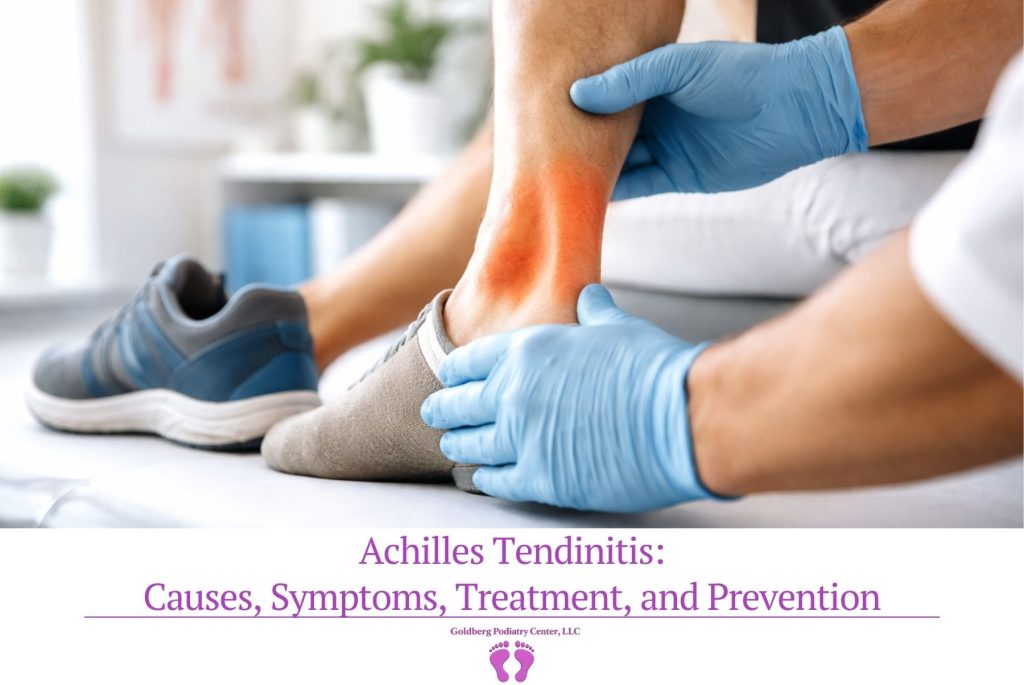
Achilles tendinitis is one of the most common overuse injuries affecting the foot and ankle, particularly among active individuals, runners, and those who spend long hours on their feet. At Goldberg Podiatry Center, we frequently treat patients suffering from Achilles tendon pain and help them return to comfortable, pain-free movement through personalized and evidence-based care.
This article will explain what Achilles tendinitis is, what causes it, how it’s treated, and when you should seek professional podiatric care.
What Is the Achilles Tendon?
The Achilles tendon is the largest and strongest tendon in the body, connecting the calf muscles (gastrocnemius and soleus) to the heel bone. It plays a crucial role in walking, running, jumping, and pushing off the ground.
Despite its strength, the Achilles tendon is vulnerable to injury—especially when exposed to repetitive stress without adequate recovery.
What Is Achilles Tendinitis?
Achilles tendinitis is an inflammatory condition caused by overuse or excessive strain on the Achilles tendon. It often develops gradually and can worsen over time if left untreated.
There are two primary types:
- Non-Insertional Achilles Tendinitis – Affects the middle portion of the tendon, commonly seen in younger, active individuals.
- Insertional Achilles Tendinitis – Occurs where the tendon attaches to the heel bone and can affect people of all activity levels.
Common Causes of Achilles Tendinitis
Achilles tendinitis is typically caused by repetitive stress rather than a single injury. Common contributing factors include:
- Sudden increase in physical activity or intensity
- Tight calf muscles
- Improper or unsupportive footwear
- Flat feet or high arches
- Overpronation (foot rolling inward)
- Exercising on hard or uneven surfaces
- Lack of proper stretching
- Age-related tendon degeneration
Symptoms of Achilles Tendinitis
Symptoms may vary in severity but often include:
- Pain or stiffness along the Achilles tendon, especially in the morning
- Tenderness or soreness after physical activity
- Swelling or thickening of the tendon
- Warmth or redness near the heel
- Pain that worsens with continued activity
Ignoring these symptoms can increase the risk of Achilles tendon rupture, a much more serious injury.
How Is Achilles Tendinitis Diagnosed?
At Goldberg Podiatry Center, diagnosis begins with a thorough physical examination and a detailed review of your symptoms and activity level. Imaging studies such as X-rays, ultrasound, or MRI may be used to assess tendon damage or rule out other conditions.
Treatment Options for Achilles Tendinitis
Early intervention leads to the best outcomes. Treatment plans are customized based on the severity of the condition and may include:
Conservative Treatments
- Activity modification and rest
- Custom orthotics to correct biomechanical issues
- Stretching and strengthening exercises
- Physical therapy
- Anti-inflammatory treatments
- Supportive footwear recommendations
Advanced Treatments
- Shockwave therapy
- Immobilization in severe cases
- Minimally invasive procedures (when conservative care fails)
Surgery is rarely required and is considered only when non-surgical treatments do not provide relief.
Preventing Achilles Tendinitis
You can reduce your risk of developing Achilles tendinitis by:
- Gradually increasing activity levels
- Wearing supportive, well-fitting shoes
- Stretching calf muscles regularly
- Avoiding overtraining
- Using orthotics if recommended by your podiatrist
- Allowing proper recovery time between workouts
Frequently Asked Questions About Achilles Tendinitis
Q: Can Achilles tendinitis heal on its own?
A: Mild cases may improve with rest, but without proper treatment, symptoms often return or worsen. Professional care helps ensure proper healing.
Q: How long does recovery take?
A: Recovery can take several weeks to months depending on severity, treatment compliance, and activity level.
Q: Is it safe to exercise with Achilles tendinitis?
A: Continuing high-impact activity can worsen the condition. A podiatrist can recommend safe modifications or alternative exercises.
Q: What shoes are best for Achilles tendinitis?
A: Supportive shoes with proper heel cushioning and arch support are ideal. Avoid worn-out or minimalist footwear during recovery.
Q: When should I see a podiatrist?
A: If pain persists longer than a week, worsens, or interferes with daily activities, it’s time to seek professional care.
Expert Achilles Tendinitis Care in Livingston, NJ
If you’re experiencing heel or Achilles tendon pain, early diagnosis and treatment are key. Goldberg Podiatry Center offers comprehensive, patient-centered care using the latest techniques to relieve pain and restore mobility.
Contact Information
Goldberg Podiatry Center
22 Old Short Hills Rd, Suite 214
Livingston, NJ 07039
📞 Phone: (973) 251-2906
🌐 Website: https://goldbergpodiatry.com
📅 Request An Appointment: https://goldbergpodiatry.com/appointments